
ADHD Assessments
Understanding How Your Brain Works—Without Judgement
If you’re questioning whether you might be an ADHDer, you may have spent years feeling overwhelmed, misunderstood, or like things are “harder than they should be.” At the same time, you may have recognised qualities like creativity, curiosity, sensitivity, or the ability to think differently, strengths that haven’t always been understood or supported in the environments you’ve been in. Perhaps you’ve tried various forms of therapy without much traction, often felt an outsider, or felt that everyday tasks are just harder for you than others but can’t quite figure out why.
At STIA Psychology, we offer a comprehensive, neuroaffirming ADHD assessment process—designed not just to determine whether you meet the formal diagnostic criteria, but to help you understand your way of thinking, feeling, and functioning.
A Neuroaffirming Approach
We view ADHD as part of the wide neurodiversity we see amongst us all. It is currently understood to be a “neurodivergence”, meaning it is a less common way of processing, focusing, and engaging with the world. It is not something that is “wrong” or needs to be fixed.
Our approach:
Recognises both strengths and challenges
Values your lived experience as central to the assessment
Avoids reducing you to a checklist or label
Focuses on understanding, not judgement
Provides recommendations that support you to function on your own terms
At the same time, we maintain a rigorous, evidence-based diagnostic process, as a formal diagnosis can be important for accessing supports, medication, or workplace and educational accommodations.

What Is ADHD?
ADHD is considered a neurodevelopmental difference in how an individual’s brain interprets the world. Characteristics of ADHD include differences in attention, regulation, organisation, and executive functioning. Whilst everyone varies in these characteristics, individuals with an ADHD profile are considered neurodivergent, and these areas can impact day to day life and functioning, depending on the context and environment.
Unidentified adult ADHDers are frequently misunderstood and under-recognised, particularly for females, gender diverse individuals or individuals who have developed compensatory strategies for their differences.
Who Would Benefit from an ADHD Assessment?
Our assessments will be helpful if you:
Have always felt “different” or struggled with focus, organisation, or task initiation/completion
Experience cycles of burnout, overwhelm, or inconsistency
Have felt you may have previously been misdiagnosed, or feel your experiences haven’t been fully understood
Want clarity to guide supports or self-understanding

Our Assessment Process
What to expect
Our clinic provides comprehensive, evidence-based ADHD assessments for adults:
Thorough Clinical Interview (90 minutes), with guidance after this appointment as to whether it would be appropriate to continue forward with the remainder of the assessment.
Standardised ADHD Questionnaires
Cognitive Assessment (attention, memory, processing speed, executive function)
Comprehensive Diagnostic Report with tailored recommendations
We differentiate between ADHD and overlapping conditions using standardised tools and clinical expertise.
Ability to seek pharmacological intervention (medication) if appropriate from our in house consult psychiatrist
Our Assessment Process
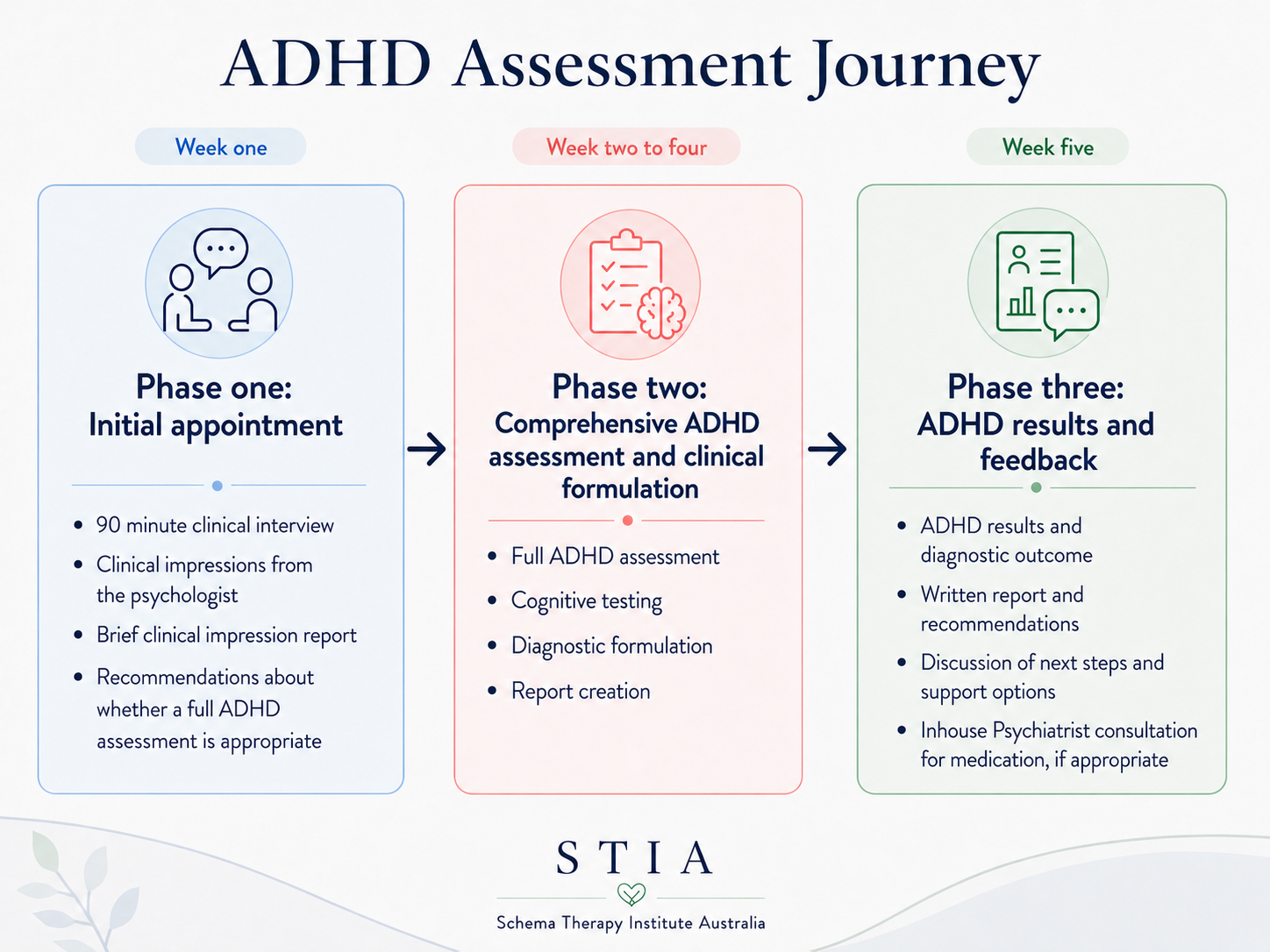
Summary of Assessment Procedure
Number of Sessions: 3 appointments
Time untill final report: 5 weeks.
Full Assessment Total: $2400 ($800 paid at time of booking, $800 paid before comprehensive ADHD assessment, $800 paid before feedback session)
Why an Assessment With a Psychologist and Not a Psychiatrist?
Benefits of pursuing an assessment of ADHD with a psychologist can be valuable as this offers a holistic and detailed understanding of how an individual’s brain works, not just whether they meet formal diagnostic criteria. Rather than focusing solely on labels or medication, a psychological assessment explores an individual’s cognitive profile, life history, and the context of their experiences. This process helps differentiate ADHD from other experiences like anxiety, trauma, or sleep issues, and provides a comprehensive report that supports personalised strategies, workplace or study accommodations, and, if needed, a smoother pathway to pharmacological intervention.
Do I Need to See a Psychiatrist?
Not everyone who completes an ADHD assessment will need or want medication. At STIA Psychology, psychiatrist involvement occurs only if:
The assessment supports a diagnosis of ADHD, and
You wish to explore pharmacological options
If this pathway is appropriate, we can support referral to our in-house consultant psychiatrist or another trusted psychiatrist, using your comprehensive psychological assessment report to streamline the process and reduce the need for repeated assessments.
This approach ensures that:
Medication decisions are well informed and evidence based
ADHD is clearly differentiated from other factors such as anxiety, trauma, or sleep difficulties
You receive a holistic understanding of your brain — not just a label