
What is schema therapy?
Schema therapy is much more than a talking therapy. It is an active, experiential treatment for long standing difficulties with emotional and relationship patterns that often begin early in life and continue to recur in adulthood. While conversation is an important part of therapy, much of the work happens actively in the room through techniques such as imagery, chair work and other experiential exercises designed to create emotional change, not just intellectual understanding.
Schema therapy was developed by American psychologist Dr Jeffrey Young, initially for people who had not benefited sufficiently from standard cognitive behavioural therapy (CBT). It brings together ideas and techniques from CBT, attachment theory, emotion focused therapy, psychodynamic approaches and experiential therapies within a single, integrative model.
This guide explains what schema therapy is, how it works, who it is used for, what the research shows, and what it costs in Australia. It has been developed by the Schema Therapy Institute Australia (STIA), which provides ISST accredited schema therapy training and supervision and operates schema therapy clinics across Melbourne.
On this page
- How does schema therapy work?
- Who developed schema therapy?
- What is a schema?
- What are the 18 schemas?
- What are schema modes?
- How your psychologist helps
- What happens in a session?
- What techniques are used?
- How many sessions?
- Who is schema therapy for?
- What does the research say?
- Schema therapy compared with CBT, DBT and EMDR
- Cost and Medicare in Australia
- Telehealth
- How to find a well trained schema therapist
- What is STIA’s role?
- How to book
- Questions people ask
How does schema therapy work?
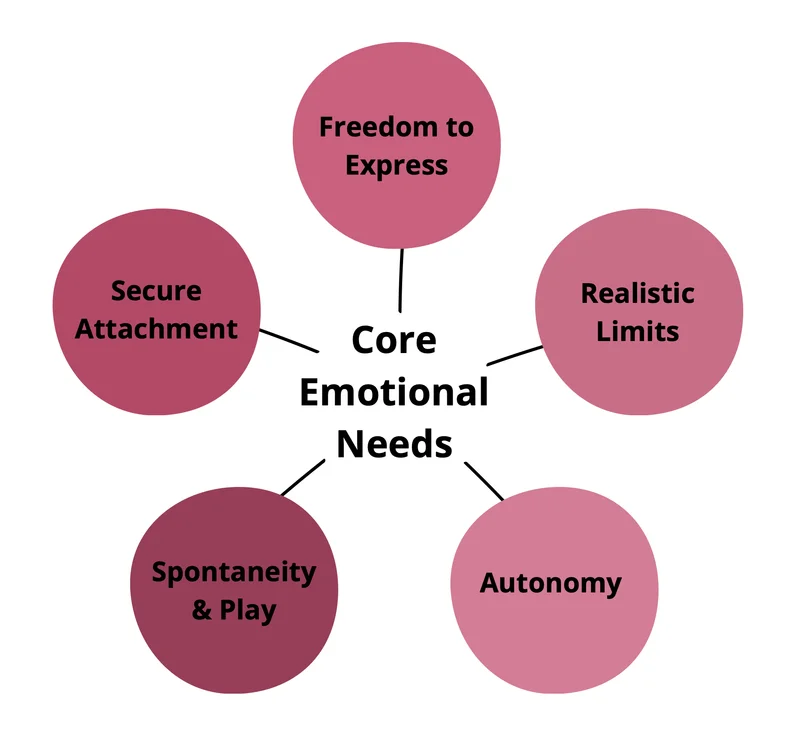
Schema therapy begins with a simple idea: all children have core emotional needs. These include feeling safe and securely connected to others, having the freedom to express emotions and needs, developing autonomy and a sense of competence, having opportunities for play and spontaneity, and learning appropriate limits and self control.
When these needs are met well enough, children are more likely to develop a stable sense of themselves and others. When important needs are repeatedly unmet, through experiences such as neglect, criticism, abuse, loss, emotional disconnection, overprotection or a lack of appropriate boundaries, children naturally try to make sense of what is happening.
They may come to conclusions such as: "I'm not good enough," "People I love will leave me," "I can't rely on anyone," or "My feelings and needs don't matter."
Over time, these patterns of beliefs, emotions, memories and bodily responses can develop into what schema therapy calls schemas.
Schemas do not simply disappear when we become adults. They can remain in the background and become activated when something in the present feels similar to an earlier experience. A partner arriving home late might trigger an Abandonment schema. Neutral feedback from a manager might activate a Defectiveness or Failure schema and be experienced as "I'm not good enough."
When a schema is triggered, people also develop ways of coping with the distress it creates. In schema therapy, these coping responses generally involve surrendering to the schema, avoiding it, or overcompensating for it. For example, someone may repeatedly choose relationships that reinforce an old pattern, avoid intimacy altogether, or become highly controlling or perfectionistic in an attempt to prevent themselves from feeling vulnerable.
These coping strategies often made sense at the time they developed. The difficulty is that, in adulthood, they can keep the original pattern going.
Schema therapy therefore works at several levels. You and your psychologist identify the schemas and coping patterns that are affecting you and explore how they developed. You learn to recognise when these patterns are being triggered so that you have more choice in how you respond.
Importantly, schema therapy does not rely on insight or conversation alone. Experiential techniques such as imagery rescripting and chair work are used to work directly with the emotions, memories and unmet needs connected to schemas. Therapy also focuses on helping you develop healthier ways of responding to those needs in your life now.
The therapeutic relationship itself is an important part of this process. Through an approach called limited reparenting, the psychologist aims to provide a relationship that is warm, reliable, validating and appropriately boundaried, while helping the person gradually learn to meet their own emotional needs in healthier ways.
This is one of the features that distinguishes schema therapy from many shorter, skills based approaches. It does not only ask, "How can we change this behaviour?" It also asks, "Where did this pattern come from? What emotional need sits underneath it? And what needs to happen now for this pattern to change?"
Schema therapy therefore works with thoughts, emotions, memories, behaviours, relationships and the therapeutic relationship itself, with the aim of creating deeper and more lasting change.
Who developed schema therapy?
Schema therapy was developed by Dr Jeffrey Young, an American psychologist who trained with Aaron Beck, the founder of cognitive therapy, in the 1980s. Young noticed that some clients made good progress with CBT while others did not, even though they attended and did the work. The ones who struggled tended to have problems that had been there as long as they could remember, that showed up across every area of life, and that were tied up with how they saw themselves and other people. Short, present focused treatment was not reaching them.
Over the following two decades Young and his colleagues built an approach for exactly those people. The standard reference is the 2003 book Schema Therapy: A Practitioner's Guide by Jeffrey Young, Janet Klosko and Marjorie Weishaar, which describes the 18 schemas, the coping styles, the modes and the techniques that are still used today.
The approach is now taught and practised around the world. The International Society of Schema Therapy (ISST), founded in 2006, sets the standards for training and certification. In Australia, STIA runs ISST accredited training and supervision, and STIA's founder, Dr Rita Younan, is an Advanced Schema Therapist, supervisor and trainer with the ISST and Vice President (Events and Symposia) of the Jeff Young Schema Therapy Association.
What is a schema?
In everyday language, a schema is a pattern or a template. In schema therapy, the full name is an early maladaptive schema: a broad, enduring theme about yourself and your relationships that develops in childhood or adolescence. It is made up of memories, emotions, bodily sensations and beliefs, and can continue to shape how you experience yourself, other people and the world in adult life.
A few things about schemas matter in therapy:
- They feel true. A schema is not simply a thought you can argue away. It is how the world has always seemed. People with a Defectiveness schema do not merely think, "I might be flawed." They can feel it deeply, even when there is plenty of evidence to the contrary.
- They are self perpetuating. Schemas can shape what we notice, expect and are drawn towards, often outside our conscious awareness. This means people can find themselves repeating patterns without fully understanding why. Someone with an Emotional Deprivation schema, for example, may repeatedly become involved with emotionally unavailable people without consciously choosing this pattern. Because the relationship then fails to meet their emotional needs, the original schema is reinforced: "No one will really be there for me."
- They are triggered, not constant. You may go weeks without a schema causing difficulty, and then one event activates it strongly, bringing with it the emotions and reactions of much earlier experiences.
- They developed in the context of unmet needs. Schemas often make sense when we understand what a child was trying to adapt to or cope with. That is why schema therapy approaches them with compassion rather than treating them as personal faults.
Everyone has some schemas. They generally become a focus of therapy when they are strong enough, and triggered often enough, to keep you stuck and lead you to repeat the same unhelpful emotional, behavioural and relationship patterns, often without realising that the schema is helping to drive the pattern.
What are the 18 early maladaptive schemas?
Jeffrey Young grouped the 18 early maladaptive schemas into five broad categories. Each category reflects patterns that can develop when important emotional needs are not adequately met during childhood or adolescence.
Most people recognise some schemas more strongly than others, and it is common to have several that become active in different situations. The names below are those commonly used in schema therapy and in the Young Schema Questionnaire.
Disconnection and rejection
These schemas are associated with the need to feel safe, connected, accepted and emotionally cared for.
- Abandonment / Instability. A strong expectation that the people you rely on may leave, become unavailable or be unable to provide consistent support. This can make closeness feel uncertain or unsafe.
- Mistrust / Abuse. An expectation that other people may hurt, manipulate, deceive, humiliate or take advantage of you.
- Emotional Deprivation. A sense that your emotional needs are unlikely to be understood or adequately met by others: that people will not really listen, care for, support or protect you.
- Defectiveness / Shame. A deeply held sense that there is something wrong, flawed or unlovable about you, together with a fear that others would reject you if they knew the "real" you.
- Social Isolation / Alienation. A feeling of being different from other people, outside the group, or as though you do not truly belong.
Impaired autonomy and performance
These schemas relate to the need to develop independence, confidence and a sense that you can manage life effectively.
- Dependence / Incompetence. A belief that you cannot manage everyday responsibilities or make important decisions without considerable help or reassurance from others.
- Vulnerability to Harm or Illness. A heightened fear that illness, danger, financial disaster or another catastrophe could happen at any time and that you would be unable to cope.
- Enmeshment / Undeveloped Self. Becoming so emotionally connected with a parent, partner or other important person that it can be difficult to develop a clear sense of your own identity, preferences or direction.
- Failure. A persistent belief that you are less capable, successful or competent than other people, or that you are destined to fail.
Impaired limits
These schemas relate to learning appropriate boundaries, self control, responsibility and consideration of other people.
- Entitlement / Grandiosity. A belief that you should be able to have what you want regardless of normal limits, rules or the needs of others, or that you should receive special treatment.
- Insufficient Self Control / Self Discipline. Difficulty tolerating frustration, delaying gratification, managing impulses or persisting with tasks that are uncomfortable, repetitive or boring.
Other directedness
These schemas involve placing other people's needs, reactions or approval ahead of your own needs and preferences.
- Subjugation. Giving excessive control to others, suppressing your own needs, opinions or feelings in order to avoid conflict, rejection, anger or other negative consequences.
- Self Sacrifice. Consistently putting other people's needs ahead of your own, often because you do not want others to feel hurt, disappointed or burdened. Over time, this can lead to exhaustion, resentment or neglect of your own needs.
- Approval Seeking / Recognition Seeking. Relying heavily on approval, achievement, status or recognition from others in order to feel worthwhile or secure in yourself.
Overvigilance and inhibition
These schemas are associated with excessive self control, caution or pressure, often at the expense of spontaneity, emotional expression, play and the freedom to make mistakes.
- Negativity / Pessimism. A strong tendency to focus on what might go wrong, while overlooking or minimising positive possibilities.
- Emotional Inhibition. Holding back feelings, affection, vulnerability or spontaneity because expressing them feels unsafe, embarrassing or out of control.
- Unrelenting Standards / Hypercriticalness. Feeling that you must meet extremely high standards, perform exceptionally well or continually achieve, often at the expense of rest, enjoyment, relationships or wellbeing.
- Punitiveness. A belief that mistakes should be met with harsh consequences and that people, including yourself, should be strongly criticised or punished when they fall short.
Schemas can influence our behaviour in different ways. Schema therapy describes three main coping styles: surrender, where we behave as though the schema is true; avoidance, where we try to stay away from situations or feelings that might activate it; and overcompensation, where we fight against the schema by behaving in the opposite way, sometimes to an extreme.
These coping patterns often operate automatically and outside our conscious awareness. This is why two people with the same schema can look very different: the underlying schema may be similar, but the way they have learned to cope with it can be quite different.
What are schema modes?
Schemas describe the longer term patterns we carry. Schema modes describe the different parts or sides of ourselves that can become active in a particular moment.
We all have different sides of ourselves. We might have a vulnerable side that feels frightened or hurt, an angry side, a part that shuts down and disconnects, or a harsh inner critic that tells us we are not good enough. In schema therapy, these different emotional states or "parts" are called modes.
A mode brings with it particular feelings, thoughts, body sensations and ways of behaving. Most people can recognise moving between different modes during a difficult situation: for example, feeling hurt, then becoming angry, then emotionally shutting down, and later becoming highly self critical.
These shifts can happen quickly and often outside our conscious awareness. Schema therapy helps people learn to recognise which part of themselves has become active, understand what has triggered it, and respond to the underlying need in a healthier way.
Schema therapists often work with modes because they make complex patterns easier to recognise in the moment. Rather than only asking, "What lifelong schema do I have?", therapy can also ask, "What part of me is active right now, why has it shown up, and what does that part need?"
Modes are commonly grouped into four broad types.
Child modes
Child modes carry emotional experiences and unmet needs that often have their origins in childhood.
The Vulnerable Child can feel lonely, frightened, ashamed, rejected, helpless or deeply sad and often carries much of the emotional pain connected with schemas.
The Angry Child expresses anger or frustration when important emotional needs are not being met.
The Impulsive or Undisciplined Child has difficulty tolerating frustration or limits and may want immediate relief or gratification.
The Happy Child feels safe, loved, accepted, playful, curious and free. Schema therapy aims to create more space for this part of the person.
Coping modes (our survival strategies)
Coping modes are ways of protecting ourselves from painful emotions or schemas. They often developed for a good reason but can become unhelpful when they continue automatically in adult life.
The Compliant Surrenderer gives in, accommodates others and may struggle to express personal needs or boundaries.
The Detached Protector disconnects from emotions and may withdraw, numb out or distract through activities such as work, food, alcohol, screens or excessive busyness in order to avoid painful feelings.
An Overcompensating mode tries to fight against vulnerability or a schema, sometimes through excessive control, perfectionism, competitiveness, superiority, dominance or aggression.
These coping modes may once have helped a person feel safer. In adulthood, however, they can also prevent important emotions and needs from being recognised and addressed.
Inner critic modes
Sometimes called parent modes, these represent harsh or demanding messages that have been internalised over time.
The Punitive Critic attacks or shames the person and may communicate messages such as "You are bad," "You deserve this," or "You should be punished for making a mistake."
The Demanding Critic places relentless pressure on the person to perform, achieve, please others or meet unrealistic standards. Its message is often something like, "You must do more," "You should be better," or "You are not allowed to stop."
Schema therapy works to reduce the power of these critical voices, including through experiential techniques such as chair work.
Healthy Adult
The Healthy Adult is the part of us that can respond to ourselves and others in a balanced, compassionate and realistic way.
It can comfort and protect the Vulnerable Child, understand and appropriately express anger, set healthy limits, challenge harsh inner critics and recognise when an old coping strategy is no longer helpful.
Everyone has a Healthy Adult mode, although it may feel stronger in some situations than others. A central goal of schema therapy is to strengthen this part of the person so that it can increasingly guide choices, relationships and responses to difficult emotions.
How will your psychologist help you work with schemas and modes?
You are not expected to identify or change these patterns on your own. Your psychologist will help you gradually make sense of which schemas and modes are most relevant to you, what tends to trigger them, where they may have developed, and how they influence your emotions, relationships and behaviour today.
Together, you may begin to notice patterns that previously happened automatically or outside your awareness. For example, you might recognise that when you feel rejected, a Vulnerable Child mode is activated and a Detached Protector quickly takes over by shutting down or withdrawing. Or you may begin to see how an Emotional Deprivation schema contributes to repeatedly choosing relationships in which your emotional needs are not adequately met.
Understanding the pattern is only one part of the work. Your psychologist will also help you recognise the emotional need underneath it and develop healthier ways of responding. This may involve learning to express needs and set boundaries, challenging harsh inner critics, reducing coping strategies that are no longer helping, and strengthening the Healthy Adult part of yourself.
Schema therapy also uses experiential techniques such as imagery rescripting and chair work to work with these patterns at an emotional level, rather than relying on insight or conversation alone.
Over time, the aim is not simply to know the names of your schemas and modes. It is to become better able to notice when an old pattern has been triggered, understand what is happening, and choose a different response rather than automatically repeating the same unhelpful pattern.
What happens in a schema therapy session?
At STIA, sessions generally run for 50 to 60 minutes. Therapy is usually weekly at first and may move to fortnightly as treatment progresses. While every person's therapy is different, schema therapy broadly involves two overlapping phases: assessment and understanding, followed by active change work.
Assessment, understanding and developing shared goals
The first few sessions are about getting to know you and developing a shared understanding of what has brought you to therapy. Your psychologist will ask about the difficulties you are experiencing now, your history, important relationships and experiences, previous therapy, and the patterns you may have noticed repeating in your life.
You will also be asked about what you would like to change and what you hope to get from therapy. Developing clear therapy goals together is important because schema therapy is collaborative: you and your psychologist are working as a team towards an agreed understanding of the difficulties and what needs to change.
As part of the assessment, you will usually be asked to complete a schema questionnaire, such as the Maladaptive Schema Questionnaire, as well as a questionnaire exploring your core emotional needs. Depending on what is relevant for you, your psychologist may also use questionnaires that help explore your schema modes, attachment style, or how you experience, understand and manage emotions.
These questionnaires are not designed to put you into a box or give you a label. They provide another source of information that you and your psychologist can explore together alongside your own experiences and history.
Your psychologist will then bring this information together into what is called a shared formulation or case conceptualisation. In simple terms, this is a personalised map that helps you understand what is happening for you now, why these patterns may have developed, what tends to trigger them, how you have learned to cope, and what may be keeping the difficulties going today.
Together, you will identify the schemas and modes that appear most important, the emotional needs underneath them, and the coping patterns that may once have protected you but are now getting in the way.
For many people, this part of therapy can be powerful in itself. Experiences that previously felt confusing or disconnected can begin to make sense: "There is a reason I respond this way, and I can begin to understand the pattern."
Active change work
Once you and your psychologist have developed this shared understanding, therapy increasingly focuses on changing the patterns that are keeping you stuck. Schema therapy moves between the past and the present, because understanding where a pattern came from can help you change how it operates in your life now.
Some sessions may use imagery rescripting to work with memories and experiences connected to the development of a schema, helping to identify and respond to emotional needs that were not adequately met at the time.
Other sessions may use chair work, where different modes or "parts" of yourself are brought into dialogue. This can help you connect with vulnerable feelings, challenge a harsh inner critic, express anger or needs that have been suppressed, and strengthen your Healthy Adult response.
Other sessions may focus on something that happened this week: an argument with your partner, feeling rejected by a friend, shutting down at work, becoming highly self critical, or noticing yourself repeating an old relationship pattern. Together, you and your psychologist might explore: What was triggered? Which schema or mode became active? What were you feeling underneath? What did you need? How did you cope? And what might a healthier response look like?
Between sessions, you may be encouraged to notice when schemas and modes are activated and practise responding differently. This might involve setting a boundary, expressing a need, challenging an inner critic, behaving differently in a relationship, or using a schema diary or flashcard to strengthen a healthier response.
The relationship with your psychologist
The relationship between you and your psychologist is also an important part of schema therapy. Your psychologist aims to provide a relationship that is warm, genuine, reliable and appropriately boundaried, while helping you recognise and change patterns as they arise.
Schema therapists are trained to be open about what they notice, including when a coping mode or schema appears within the therapy relationship itself. The approach is sometimes described as empathic confrontation: understanding and having compassion for why a pattern developed, while also being honest about the ways it may now be hurting you or keeping you stuck.
Ultimately, schema therapy is something you and your psychologist do together. The aim is not simply to give you a list of schemas or explain why you are the way you are, but to develop a shared understanding of yourself and then use that understanding to create meaningful emotional, behavioural and relationship change.
What techniques does schema therapy use?
Schema therapy is an integrative therapy, which means it draws on ideas and techniques from several different therapeutic approaches and brings them together in a structured way. It is also an active and experiential therapy: change does not come only from talking about patterns, but from experiencing and practising something different.
These are some of the approaches you are most likely to encounter in schema therapy.
Limited reparenting
The relationship with your psychologist is an important part of schema therapy. Within clear professional boundaries, the psychologist aims to provide some of the emotional experiences that may have been missing earlier in life, such as warmth, consistency, validation, encouragement, protection, honesty and appropriate limits. This also helps you understand your attachment style and how it plays out in your relationships.
It is called limited reparenting because your psychologist is not replacing a parent, and the therapeutic relationship always has clear professional boundaries. The aim is to help you experience what it is like for important emotional needs to be recognised and responded to, while gradually learning to provide more of this care and support for yourself, or from healthy people in your life.
In schema therapy, this experience can be particularly powerful because schemas are not changed through intellectual understanding alone. Experiencing relationships differently can help create new emotional learning.
Imagery rescripting
Imagery rescripting is an experiential technique used to work with emotionally significant memories and experiences.
You may be invited to close your eyes and bring to mind an upsetting childhood memory, or another image connected with a schema. Rather than simply remembering what happened, the scene is then changed or "rescripted."
Your psychologist, your adult self, or both may enter the image to protect the younger you, stop harmful behaviour, provide comfort, express what should have been said, or help ensure that an important emotional need is finally recognised. This emotion focused technique is designed to create change at the schema level by shifting the emotional meaning attached to the original experience.
The aim is not to pretend that the past happened differently. It is to change the emotional meaning of the memory and help the younger, vulnerable part of you experience the protection, understanding or care that was missing at the time.
Imagery rescripting is one of the most studied experiential techniques used in schema therapy and is also used independently in the treatment of problems such as trauma related memories, flashbacks and nightmares. You can read more on our page about imagery rescripting.
Chair work (mode dialogues)
Chair work helps bring different schema modes, or different parts or sides of yourself, into the room so that they can be experienced and understood more clearly.
Different chairs may represent different modes. For example, you might sit in the Punitive Critic chair and express the harsh things that part of you says, then move to another chair and respond from your Healthy Adult side. At other times, your psychologist might speak directly to a vulnerable part of you or help you practise standing up to a demanding or critical voice.
Rather than simply thinking about these different parts internally, chair work makes the dialogue visible and active. This can make it easier to recognise where particular messages come from, understand their impact, respond to them differently and, over time, reduce their power and harmful influence.
Mode work
Mode work focuses on recognising what is happening for you in the moment.
You learn to notice which mode or part of yourself has become active, what triggered it, what emotions and needs are underneath it, and how you are responding.
For example, you might learn to recognise: "My Detached Protector has taken over because something has made me feel vulnerable," rather than simply experiencing yourself as numb, disconnected or wanting to withdraw.
Your psychologist will help you understand why that mode developed and what it has been trying to protect you from. The goal is not to get rid of parts of yourself, but to reduce the influence of coping modes that are no longer helping and strengthen your Healthy Adult response.
Mode maps, diaries and questionnaires can all help you recognise these patterns more easily, make different choices when they are triggered, and find healthier ways to get your emotional needs met, helping you feel better about yourself and relate to others in more satisfying ways.
Questionnaires
Questionnaires are often used as one part of the schema therapy assessment.
At STIA, we use the Maladaptive Schema Questionnaire, which was developed in collaboration with our Head of Research to provide a more accurate and psychometrically sound assessment of maladaptive schemas.
Your psychologist may also ask you to complete other questionnaires exploring areas such as schema modes, core emotional needs, attachment patterns, or how you experience, understand and manage emotions.
These questionnaires are not designed to label you or define who you are. Instead, they provide another source of information that you and your psychologist can consider alongside your history, current difficulties, relationships and goals for therapy.
The results help inform your shared formulation: the personalised understanding you develop together of what is happening for you now, why particular patterns may have developed, what tends to trigger them, and what may be keeping them going.
Questionnaires may also be repeated later in therapy to help you and your psychologist reflect on what has changed over time.
Traditionally, schema therapists have commonly used the Young Schema Questionnaire (YSQ) to assess early maladaptive schemas. However, our research identified important limitations in the way the YSQ measures schemas, which informed our decision to develop and use the Maladaptive Schema Questionnaire instead. You can read more about this research, including our published paper on these measurement issues, on our research page.
Cognitive and behavioural techniques
Schema therapy also incorporates cognitive and behavioural techniques commonly associated with CBT.
Cognitive techniques can help you examine the beliefs attached to a schema, consider evidence that supports or challenges them, and develop a more balanced and compassionate perspective. Tools such as schema diaries and flashcards can help strengthen these new perspectives outside the therapy room.
Behavioural work focuses on changing the patterns that schemas and coping styles create in everyday life. In schema therapy this is often called behavioural pattern breaking.
For example, someone who usually stays silent because of a Subjugation schema might practise expressing a preference or setting a boundary. Someone with an Emotional Deprivation schema might begin choosing relationships in which there is greater emotional availability, rather than automatically repeating familiar patterns.
This work is often introduced later in therapy, after there has been enough emotional work to begin weakening the schema itself. Schemas tend to be deeply rooted and can feel as though they are "fighting for survival," so simply asking someone to behave differently is often not enough. People usually need to experience change at an emotional level first, for example through imagery, chair work and the therapeutic relationship, before they are able to consistently make different choices in everyday life.
Behavioural changes are important because schema therapy is not only about understanding why a pattern developed. It is also about doing something different when the old pattern is triggered, so that new and healthier ways of relating to yourself and others can gradually become established.
How many sessions does schema therapy take?
Schema therapy is generally considered a medium to longer term therapy, although the length of treatment varies considerably from person to person.
This is because schema therapy is often used for patterns that have developed over many years and may be deeply connected to the way a person experiences themselves, relationships and emotions. These patterns usually take time to understand, work through emotionally and change in everyday life.
Some people come to therapy with one or two relatively focused patterns and may make meaningful progress within several months. Others may be working with longstanding relationship difficulties, complex trauma, personality difficulties or several strongly established schemas and modes, and may benefit from therapy over a longer period.
Sessions are usually 50 to 60 minutes and are commonly held weekly at the beginning of therapy. As treatment progresses and changes become more established, sessions may move to fortnightly or become less frequent.
After the assessment and formulation phase, your psychologist will talk with you about what they recommend, based on your goals, the patterns you are working on and the level of support you need. Therapy is reviewed collaboratively along the way, rather than being set at a fixed number of sessions from the outset.
The aim is not to stay in therapy for a particular length of time. It is to give you enough time to understand the patterns that are causing difficulty, create change at an emotional level, practise responding differently in your life, and strengthen those changes so they are more likely to last.
If you are using a Medicare Mental Health Treatment Plan, Medicare may contribute towards a limited number of psychology sessions each calendar year. For people undertaking a longer course of schema therapy, this may cover only part of the overall treatment. See the cost section below for more information.
Who is schema therapy for?
Schema therapy can be useful for a wide range of people who want to better understand and change longstanding emotional, behavioural or relationship patterns. You do not need to have a personality disorder, complex trauma or a mental health diagnosis to benefit from understanding your schemas and modes.
However, much of the research on schema therapy has focused on more complex and longstanding psychological difficulties, particularly personality disorders. This is largely because schema therapy was originally developed by Dr Jeffrey Young for people whose difficulties had not responded sufficiently to traditional cognitive behavioural therapy (CBT), and who were experiencing entrenched patterns that tended to recur over time.
Since then, schema therapy has been applied much more broadly, from relationship difficulties, perfectionism and low self esteem through to anxiety, depression, trauma and other mental health conditions.
Borderline personality disorder and other personality difficulties
Schema therapy was first extensively studied, and remains most strongly researched, as a treatment for borderline personality disorder (BPD). It has also been studied in people with avoidant, dependent, obsessive compulsive, paranoid, histrionic and narcissistic personality disorders.
The schema mode model became particularly important in this work because it helps people understand rapidly changing emotional states and coping responses as different parts or sides of themselves becoming active.
STIA offers individual schema therapy as well as group schema therapy; see group therapy.
Complex trauma and childhood trauma
When difficult or traumatic experiences happen early in life, repeatedly, or within important caregiving relationships, their effects can extend beyond a single traumatic memory. They can influence how a person understands themselves, what they expect from relationships, how safe they feel with others and the ways they have learned to cope with difficult emotions.
Schema therapy can be particularly useful for understanding and changing these longer term patterns. It is used with people experiencing complex trauma and the effects of childhood abuse, neglect or disrupted attachment, and may also be integrated with trauma focused approaches such as EMDR.
Our trauma therapy page has more information.
Chronic or recurrent depression
For some people, depression is closely connected with longstanding schemas such as Defectiveness, Failure, Emotional Deprivation or Unrelenting Standards.
Schema therapy may be particularly helpful when depression has been present for a long time, repeatedly returns, or has not responded sufficiently to previous treatment. Rather than focusing only on depressive symptoms, therapy also examines the underlying emotional and relationship patterns that may be contributing to the depression recurring.
Relationship patterns
Schema therapy can be very useful for people who notice themselves repeating the same difficulties in relationships.
This might include repeatedly choosing emotionally unavailable partners, losing yourself in relationships, finding it difficult to express your needs, becoming intensely fearful of rejection, pushing people away when they become close, or remaining in relationships that repeatedly leave your needs unmet.
Often these patterns occur automatically and outside conscious awareness. Schema therapy helps people recognise what is driving the pattern and develop healthier ways of relating to themselves and others.
See our pages on relationship therapy and attachment styles therapy.
Anxiety that keeps returning
Schema therapy can also be used for anxiety, chronic worry and social anxiety, particularly when anxiety continues to return despite previous treatment or appears to be connected with deeper patterns.
For example, anxiety may be influenced by schemas involving Vulnerability to Harm, Abandonment, Defectiveness, Failure or Unrelenting Standards.
STIA has also conducted pilot research examining group schema therapy for severe anxiety disorders; you can read more on our research page.
Eating difficulties, low self esteem, perfectionism and burnout
Schema therapy is increasingly used for a range of other difficulties, particularly when there appears to be a longstanding emotional or behavioural pattern underneath the presenting problem.
This can include eating difficulties, chronic low self esteem, perfectionism, excessive self criticism, people pleasing and burnout.
Schema therapy will not necessarily be the right treatment for every problem or at every point in a person's life. If someone is in an acute crisis, establishing safety and stability will usually come first. For a recent or very specific difficulty, a shorter term therapy may also be entirely appropriate.
A thorough assessment with your psychologist can help determine whether schema therapy is likely to be useful for you.
What does the research say about schema therapy?
Schema therapy has now been investigated across a growing range of psychological difficulties. The strongest and most established evidence base remains in personality disorders and other complex, longstanding presentations, reflecting the populations for whom the therapy was originally developed.
This does not mean schema therapy is only appropriate for people with personality disorders. Rather, it means that this is where the largest and most rigorous clinical trials have historically been conducted. Research examining schema therapy for other difficulties, including depression, anxiety, trauma and eating disorders, continues to grow.
Randomised controlled trials are particularly important because they allow researchers to compare treatments systematically and provide stronger evidence about whether a therapy is effective. Some of the landmark trials in schema therapy are outlined below. The full references, with links, are at the end of this page.
Giesen-Bloo and colleagues, 2006, Archives of General Psychiatry
A Dutch trial randomised 86 people with borderline personality disorder to three years of twice weekly schema therapy or three years of transference focused psychotherapy. Both groups improved across a range of measures. After three years, a greater proportion of people receiving schema therapy met the study's definition of recovery, and fewer people dropped out of schema therapy. Reference.
Bamelis and colleagues, 2014, American Journal of Psychiatry
A trial conducted across 12 Dutch mental health services included 323 people with avoidant, dependent, obsessive compulsive, paranoid, histrionic or narcissistic personality disorders. Participants received schema therapy, clarification oriented psychotherapy or treatment as usual.
Three years after treatment began, a greater proportion of participants receiving schema therapy had recovered from their personality disorder compared with treatment as usual, and dropout was also lower in the schema therapy group. Reference.
Arntz and colleagues, 2022, JAMA Psychiatry
This large international trial involved 495 people with borderline personality disorder across 15 treatment sites in five countries, including Australia.
Participants received predominantly group schema therapy, a combination of individual and group schema therapy, or the usual treatment offered at their service. The combined individual and group approach reduced BPD severity more than treatment as usual and more than the predominantly group approach, and had lower dropout than the predominantly group approach. The predominantly group approach did not differ significantly from treatment as usual. Reference.
Where is the research heading?
Compared with personality disorders, there are currently fewer large scale trials of schema therapy for conditions such as depression, anxiety, eating disorders and other clinical presentations. Some of the available studies are promising, but the evidence base is still developing.
STIA is actively involved in contributing to this growing research base. Our research program, led in collaboration with Professor Gery Karantzas, Dr Pam Pilkington and Dr Rita Younan, has contributed to research examining early maladaptive schemas, attachment, childhood adversity, depression, self harm and other psychological difficulties, as well as work identifying priorities for the future of schema therapy research.
We have also been involved in research examining the measurement of schemas and in pilot work exploring schema therapy with presentations beyond personality disorders, including anxiety and complex trauma.
You can read more about our research and publications on the STIA research page.
Schema therapy compared with CBT, DBT and EMDR
People often ask how schema therapy differs from other well known psychological treatments such as CBT, DBT and EMDR.
These approaches overlap in some areas, but they were developed for different purposes and tend to emphasise different aspects of treatment. One is not automatically "better" than another. What matters is the person, the problem being treated, the stage of therapy and what is most likely to help.
Schema therapy itself is an integrative therapy, meaning it deliberately brings together ideas and techniques from several therapeutic traditions rather than relying on one method alone. At STIA, many of our psychologists are trained in more than one evidence based approach and may integrate techniques from CBT, DBT, EMDR and other therapies within a broader schema therapy formulation when this is clinically appropriate.
Schema therapy and CBT
Schema therapy grew out of cognitive behavioural therapy (CBT), so there is considerable overlap between the two.
CBT typically focuses on the links between thoughts, emotions and behaviour and helps people identify unhelpful thinking patterns, test beliefs and develop more effective behavioural responses. It is widely used for specific difficulties and can be relatively structured and time limited.
Schema therapy keeps many of these cognitive and behavioural techniques but extends the work further. It places greater emphasis on where longstanding patterns came from, the emotional needs underneath them, and how they continue to influence relationships and behaviour in the present.
Schema therapy also works more directly with emotion through experiential techniques such as imagery rescripting and chair work, and it uses the therapeutic relationship itself as an important part of treatment.
Rather than choosing between CBT and schema therapy, a schema therapist may use CBT strategies within treatment when they are useful: for example, testing a schema related belief, monitoring patterns or practising new behaviour in everyday life.
Schema therapy and DBT
Dialectical behaviour therapy (DBT), developed by Marsha Linehan, was originally designed for people with borderline personality disorder and severe difficulties with emotion regulation.
DBT places a strong emphasis on teaching practical skills in areas such as emotion regulation, distress tolerance, mindfulness and interpersonal effectiveness. These skills can be extremely useful when someone is struggling with intense emotions, impulsivity, self harm or relationship crises.
Schema therapy tends to focus more directly on the schemas, modes and unmet emotional needs that sit underneath these reactions. It asks not only, "How can I manage this emotion more effectively?" but also, "Why does this situation trigger such a powerful reaction, what part of me has been activated, and what does that part need?"
The approaches can work very well together. For some people, DBT skills provide important stabilisation and coping strategies, while schema therapy helps address the deeper emotional and relational patterns driving the distress.
At STIA, DBT informed strategies may therefore be incorporated into schema therapy when a person needs additional support with emotion regulation, distress tolerance or managing difficult interpersonal situations.
Schema therapy and EMDR
Eye movement desensitisation and reprocessing (EMDR), developed by Francine Shapiro, is a trauma focused therapy designed to help people process distressing memories and reduce the emotional intensity associated with them.
EMDR typically focuses on particular traumatic memories, images, beliefs and body sensations while using bilateral stimulation, such as eye movements or alternating tapping.
Schema therapy takes a broader view of trauma. It is interested not only in the traumatic memory itself, but also in the schemas, coping responses and relationship patterns that may have developed as a result of those experiences.
For example, trauma may contribute to schemas involving Mistrust, Defectiveness, Abandonment or Emotional Deprivation. Processing the traumatic memory can be important, but therapy may also need to address the longer term beliefs, emotional responses and relationship patterns that remain.
For this reason, schema therapy and EMDR can be highly complementary, particularly when working with childhood trauma or complex trauma. A psychologist may use EMDR to process specific traumatic memories while using schema therapy to understand and change the broader patterns those experiences have created.
Several STIA clinicians are trained in both approaches, allowing treatment to be integrated within one overall formulation when appropriate. You can read more on our EMDR therapy page.
An integrated approach
In practice, therapy does not always fit neatly into one box.
Someone may use DBT skills to manage overwhelming emotions, EMDR to process a traumatic memory, CBT techniques to test an unhelpful belief, and schema therapy to understand how these experiences fit together within a broader lifelong pattern.
At STIA, schema therapy often provides the overall framework or map for understanding the person, while techniques from other evidence based therapies can be integrated where they are likely to help.
The goal is not to fit a person into a particular therapy model. It is to develop a coherent understanding of what is happening for them and use the most appropriate therapeutic tools to help create meaningful and lasting change.
How much does schema therapy cost in Australia, and does Medicare cover it?
Fees
Fees are set by each psychologist and vary by clinician, registration and experience. At STIA, consult fees shown on our team page range from $150 to $385 a session, with most between $250 and $285. The lowest fee is for a provisional psychologist working under supervision. The fee for each clinician is listed under their name on the team page.
Medicare
Schema therapy with a registered or clinical psychologist can be claimed on Medicare in the same way as any psychology session. A rebate applies with a Mental Health Treatment Plan from your GP; the amount depends on the psychologist's registration and the financial year. The plan covers a set number of sessions each calendar year. You pay the full fee at the session and the rebate is paid back to your account. Our intake team can tell you the current rebate for the clinician you are booked with.
Do I need a referral?
No. You can book directly with STIA without a referral. A GP referral and a Mental Health Treatment Plan are needed only if you want to claim the Medicare rebate. NDIS participants with psychology in their plan are also welcome. Some private health funds pay a rebate on psychology under extras cover; check with your fund, as you cannot claim Medicare and private health on the same session.
Can I do schema therapy by telehealth?
Yes. Schema therapy is available by secure video with STIA, and many people do the whole course that way. Imagery and chair work both translate to a screen; your psychologist will guide you through setting up a quiet, private space. Medicare rebates apply to telehealth psychology sessions in the same way as in person sessions when you have a Mental Health Treatment Plan. Our team page shows which clinicians offer telehealth and on which days.
How do I find a well trained schema therapist?
Psychologists can use schema therapy techniques without being formally certified. Certification provides additional assurance that a clinician has completed a recognised program of schema therapy training, supervision and assessed clinical practice.
The International Society of Schema Therapy (ISST) sets international standards for schema therapy certification, and STIA's accredited training and supervision pathways are aligned with these standards.
There are two main levels of certification in individual schema therapy:
- Standard certification (Certified Schema Therapist): involves accredited training, ongoing schema therapy supervision, a required amount of clinical practice, and assessment of recorded therapy sessions by an independent accredited trainer or supervisor.
- Advanced certification (Advanced Certified Schema Therapist): requires further supervised practice and assessment beyond Standard certification. Clinicians at this level may also progress towards becoming accredited schema therapy supervisors and trainers.
There is also a separate certification pathway for group schema therapy.
Schema therapy clinicians at STIA
At STIA, our clinical governance framework is designed to ensure that clinicians providing schema therapy receive structured training, supervision and ongoing professional development in the model, whether or not they have yet completed formal ISST certification.
Our clinicians are supported to practise schema therapy to the standards expected of someone progressing through a certification pathway. This means they receive schema specific supervision, develop competency in the core schema therapy model and techniques, and work within STIA's broader clinical governance and supervision structures.
Some members of our team are already ISST certified schema therapists or Advanced Certified Schema Therapists, while others are actively working towards certification with training, supervision and support provided through STIA.
This allows clients to access clinicians at different stages of professional development while knowing that schema therapy at STIA is delivered within a structured system of training, supervision, oversight and clinical governance.
You can view each clinician's individual schema therapy training and certification status on our team page.
What should I look for?
When choosing a schema therapist, it can be helpful to ask about their:
- formal schema therapy training
- experience using schema therapy with your particular difficulties
- ongoing schema therapy supervision
- certification status, or whether they are currently working towards certification
- experience with core schema therapy techniques such as imagery rescripting, chair work, mode work and limited reparenting.
The ISST website also provides a directory of formally certified schema therapists internationally.
Clinicians interested in formal training can read more about certification in individual schema therapy and schema therapy training at STIA.
What is STIA's role in schema therapy in Australia?
The Schema Therapy Institute Australia (STIA) was founded by Dr Rita Younan, a senior clinical psychologist and ISST Advanced Schema Therapist, Supervisor and Trainer.
STIA has three core areas of focus:
- Treatment. We provide schema therapy for individuals, couples and groups across our Melbourne clinics and via telehealth, delivered by a team of clinical and registered psychologists who work within STIA's schema therapy training, supervision and clinical governance framework.
- Training and supervision. STIA provides ISST accredited certification training in individual and group schema therapy, as well as advanced schema therapy workshops, pre recorded training and supervision for psychologists and other mental health clinicians across Australia and internationally.
- Research and evidence based practice. STIA is committed to a scientist practitioner model, where clinical practice is informed by current research and research questions are shaped by the realities of clinical work. We actively engage in research examining schema therapy, treatment processes, assessment and good practice, with the aim of improving the quality and effectiveness of care and supporting better outcomes for clients. This commitment to evidence based practice and the ongoing development of schema therapy is also closely aligned with our organisational values.
You can learn more about STIA, our training and our research.
How do I book schema therapy?
Book online, or call 03 9823 5212 and our intake team will match you with a psychologist. You do not need a referral. Clinics in Essendon, Carlton, Werribee and Eltham, and telehealth across Victoria.
Looking for schema therapy in Melbourne?
See our clinics, what to expect at STIA and the questions people ask before their first session.
Questions people ask about schema therapy
What is schema therapy in simple terms?
Schema therapy is an active therapy for patterns that began in childhood and keep repeating in adult life. It is more than talking: sessions include hands on exercises such as imagery and chair work. It helps you understand where a pattern came from, meet the need behind it, and build a healthier way of responding.
What is schema therapy used for?
It was developed for long standing problems that did not shift with shorter therapies. It is used for borderline and other personality patterns, complex and childhood trauma, chronic depression, repeating relationship problems and anxiety that keeps returning.
Is schema therapy a type of CBT?
It grew out of CBT and still uses CBT tools, but it is a separate approach. It spends more time on childhood experiences, emotions and the therapy relationship, and it uses imagery and chair work alongside thinking and behaviour change.
How many sessions does schema therapy take?
It varies from person to person. Schema therapy is generally a medium to longer term therapy. Some people with one or two focused patterns make meaningful progress within several months; others with longstanding or complex difficulties may benefit from therapy over a longer period. Sessions are usually weekly at first. Your psychologist will recommend a plan after the assessment and review it with you along the way.
How much does schema therapy cost in Australia?
Fees are set by each psychologist. At STIA they range from $150 to $385 a session. With a Mental Health Treatment Plan from your GP, a Medicare rebate applies; the amount depends on the psychologist’s registration and the financial year.
Do I need a referral for schema therapy?
No. You can book directly. A GP referral and a Mental Health Treatment Plan are only needed if you want to claim a Medicare rebate.
Is schema therapy evidence based?
Schema therapy has been tested in randomised controlled trials, mainly for borderline and other personality disorders, published in journals such as Archives of General Psychiatry, American Journal of Psychiatry and JAMA Psychiatry. See the research section for what each trial found.
What is the difference between schema therapy and DBT?
DBT teaches skills for managing emotions and crises, often in a group plus individual sessions. Schema therapy works on the childhood patterns and modes underneath the distress. Both are used for borderline personality disorder, and some people do both.
What are the 18 schemas?
The 18 early maladaptive schemas are self defeating life patterns such as Abandonment, Mistrust, Emotional Deprivation, Defectiveness, Failure, Subjugation, Self Sacrifice, Unrelenting Standards and Punitiveness. They sit in five groups called domains. This guide lists all 18.
Can I do schema therapy online?
Yes. Schema therapy is available by secure video with STIA, and Medicare rebates apply to telehealth sessions in the same way as in person sessions when you have a Mental Health Treatment Plan.
How do I find a certified schema therapist?
Look for certification with the International Society of Schema Therapy (ISST), which lists certified therapists in its online directory. STIA trains and supervises therapists towards ISST certification and its team page shows each clinician’s schema therapy training.
References
- Young, J. E., Klosko, J. S., & Weishaar, M. E. (2003). Schema Therapy: A Practitioner’s Guide. New York: Guilford Press.
- Giesen-Bloo, J., van Dyck, R., Spinhoven, P., van Tilburg, W., Dirksen, C., van Asselt, T., Kremers, I., Nadort, M., & Arntz, A. (2006). Outpatient psychotherapy for borderline personality disorder: randomized trial of schema-focused therapy vs transference-focused psychotherapy. Archives of General Psychiatry, 63(6), 649 to 658. doi:10.1001/archpsyc.63.6.649
- Bamelis, L. L. M., Evers, S. M. A. A., Spinhoven, P., & Arntz, A. (2014). Results of a multicenter randomized controlled trial of the clinical effectiveness of schema therapy for personality disorders. American Journal of Psychiatry, 171(3), 305 to 322. doi:10.1176/appi.ajp.2013.12040518
- Arntz, A., Jacob, G. A., Lee, C. W., Brand-de Wilde, O. M., Fassbinder, E., Harper, R. P., Lavender, A., Lockwood, G., Malogiannis, I. A., Ruths, F. A., Schweiger, U., Shaw, I. A., Zarbock, G., & Farrell, J. M. (2022). Effectiveness of predominantly group schema therapy and combined individual and group schema therapy for borderline personality disorder: a randomized clinical trial. JAMA Psychiatry, 79(4), 287 to 299. doi:10.1001/jamapsychiatry.2022.0010
- International Society of Schema Therapy (ISST). Certification standards and the Find a Therapist directory. schematherapysociety.org
This guide is general information, not advice about your situation. If you are in immediate danger call 000. For 24 hour support call Lifeline on 13 11 14.