
EMDR Therapy at STIA
EMDR and Schema Therapy: A Powerful Partnership
At STIA, we help people heal from childhood experiences, long-term patterns, and emotional struggles that feel difficult to shift. Two of the main therapies we use together are Schema Therapy and EMDR. When combined, they create a strong and effective approach to healing—what we often call a “power couple” at STIA.
What Is EMDR?
EMDR (Eye Movement Desensitisation and Reprocessing) is a therapy that helps the brain heal from difficult or overwhelming experiences.
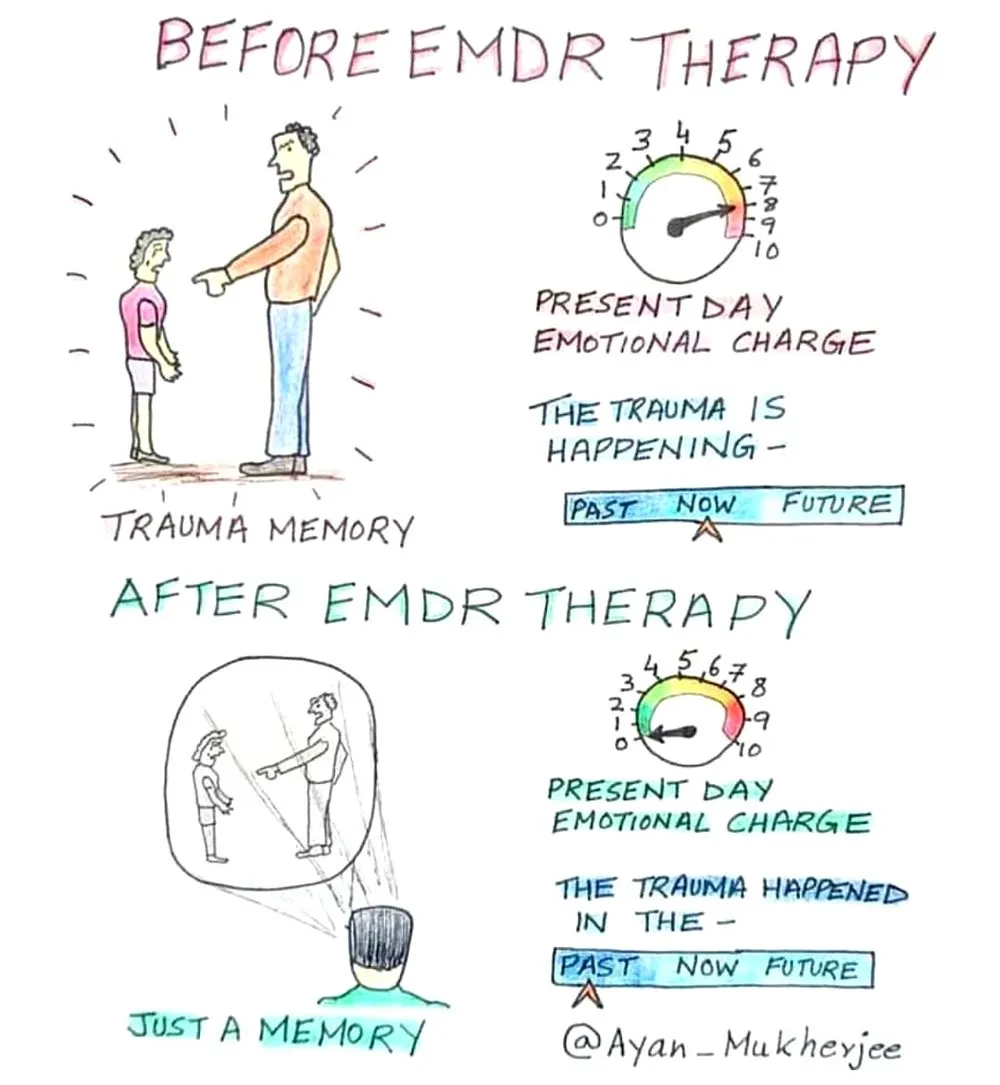
Instead of talking in circles about the past, EMDR uses gentle left–right stimulation (like eye movements or tapping) to help your brain reprocess old memories so they stop feeling so intense, painful, or “stuck” and as though they are happening “now”.
What Does EMDR Help With?
• Lower PTSD symptoms
• Reduced flashbacks and nightmares
• reduce hypervigilance and body symptoms connected to trauma
• Increased emotional stability
• Returned sense of safety
• Clearer focus and relief from physical tension
At STIA, we use EMDR not just for one-off traumas, but for deeper patterns that come from unmet needs and early experiences.
What is PTSD?
Post traumatic Stress Disorder (PTSD) is a mental health condition that may occur after a traumatic event, or after multiple traumatic events. Trauma can take many forms. Commonly, we think of events such as sexual assault, car accidents or natural disasters. However, other life experiences such as neglect in childhood, school or workplace bullying, medical crises, the death of a loved one, a job loss or relationship breakdown can also be traumatic. Each person responds uniquely to the things that happen to them. Regardless of an event itself, if our ability to cope is overwhelmed by a perceived threat, we will likely experience it as traumatic.
Post traumatic stress manifests in different ways. Some people experience an acute stress response that naturally resolves over time with the support of family and friends. For others, the impacts of trauma can persist for months or years and develop into PTSD.
Approximately 25% of people who experience a traumatic event go on to develop PTSD. About 12% of Australians will experience PTSD in their lifetime.
How EMDR and Schema Therapy
Work Together
Schema Therapy helps you understand where your patterns come from, what gets triggered for you, and understanding your emotional responses, and healing the memories connected to this. EMDR helps your brain process the memories and feelings behind those patterns.
Where Imagery Rescripting Fits In
Imagery Rescripting is a key part of Schema Therapy that allows you to go back to childhood memories—in your imagination—and experience the support, protection, or care you needed at the time. At STIA, we use EMDR and Imagery Rescripting interchangeably, depending on what you need.
Why This Approach Is Unique at STIA
At STIA, all clinicians are trained in Schema Therapy, and many also specialise in EMDR.
This allows us to weave the two approaches together in a way that is safe, personalised, and effective for long-term, deeply rooted issues.
We’re one of the few clinics that combines:
Schema Therapy
EMDR
Imagery Rescripting
to treat developmental trauma and long-standing emotional patterns.
How EMDR works
The mind's natural healing process:
The brain is built to process information, similar to how a physical wound heals.
1. “Blocked" memories:
Sometimes, a traumatic event can "block" this natural process, leaving the memory unprocessed and causing emotional distress.
2. Bilateral stimulation:
The back-and-forth eye movements, tapping, or sounds used in EMDR help activate the brain's natural healing process to work through the "blocked" memory.
3. Reprocessing the memory:
This allows the brain to reprocess the memory so that it is no longer as vivid or distressing, and new, more positive beliefs about the event can be formed.
Frequently Asked Questions
-
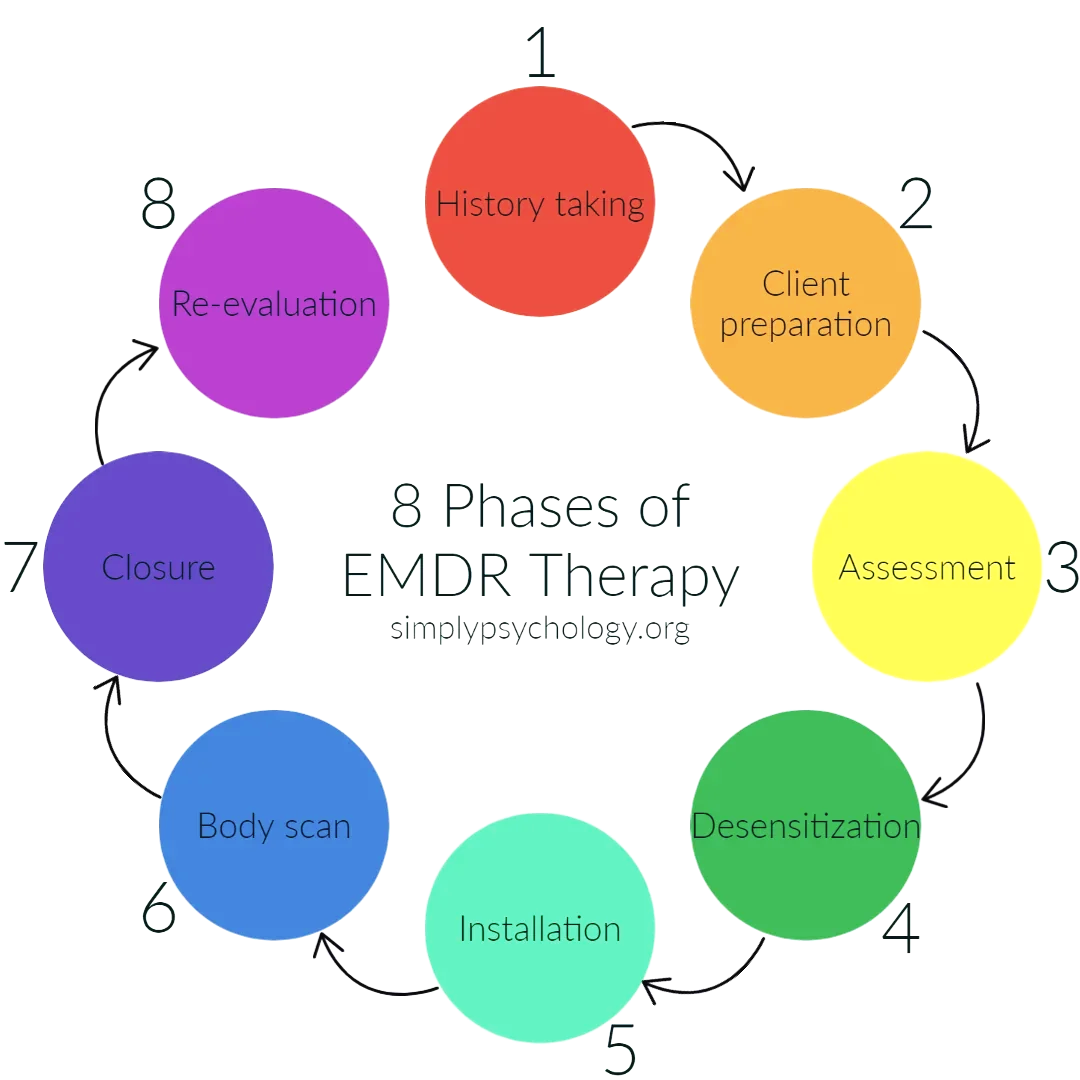
Your therapist will guide you through an eight-phase process that includes identifying target memories, emotions, and beliefs.
You will focus on the distressing memory and any negative feelings associated with it, while simultaneously engaging in bilateral stimulation ( e.g. following their fingers back and forth)
Your therapist will check in with you throughout to see how you are feeling.
The goal is not to talk about the trauma in great detail, but to allow your brain to do the work of healing itself and reprocess the memory in chunks.
-
Your therapist will begin with one or more sessions to understand your concerns and determine whether EMDR is the right approach for you. During this time, they’ll explain the EMDR process in more detail and give you space to ask questions.
A typical EMDR session lasts between 60 and 90 minutes. Generally it takes one or two sessions to process one memory and the effect can start to generalise to other memories. The number of sessions needed varies depending on your concerns, life circumstances, and any previous trauma you’ve experienced.
-
Description text goes here
-
Item description
-
Item description
Please note that to undertake therapy at STIA, your card details will need to be placed on file. We no longer take direct debiting as a mode of payment.
This does not apply to individuals who will have their sessions funded by Third Parties.
Enquire about EMDR therapy in Melbourne
To make or change a booking. Please call reception at (03) 9331 2878.